
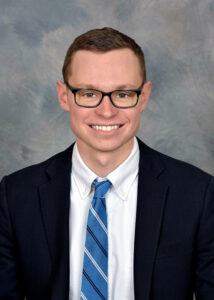
 Name: Daniel McQuaid
High School/College: Ossining High School; Yale University
Mentor and years in program: Goutham Narla, Summer 2011 – Summer 2016
Skills obtained:Cell culture, bacterial transfections, cell line transductions, cell growth assays (Incucyte, MTT), drug screening, site-directed mutagenesis, sequencing, immunoprecipitation, western blotting, qRT-PCR, flow cytometry, statistical analysis
After completing the training with the Young Scientist Foundation and going on to study and do research in a prominent university, what, in your opinion, was the significance of participating in the program?
This program was absolutely critical in shaping my future career path. The time I spent in the lab has been among the most transformative, rewarding times in my life, and made me realize how much I truly love scientific research. It is this love for research that pushed me to study molecular biology in college, pursue MD/PhD training afterward, and hopefully become a physician-scientist in the future. I attribute my life path and career choice almost entirely to my experience with the Young Scientist Foundation.
Thinking back, how did you get interested in science and research?
My interest in cancer research began due to multiple cancer diagnoses in my family when I was a teenager. After learning of their diagnoses in my sophomore year of high school, I began looking for cancer-related labs to work in the New York area, and of the 40+ labs I reached out to, Goutham Narla was one of three who responded in any capacity, and the only one to offer me some of his time for a meeting. My interest in science grew exponentially after joining his lab for the summer.
Why were you originally interested in the program?
I was originally interested in joining Goutham Narla’s lab because of the highly translational lung cancer research efforts he was leading. Meeting with him and talking research with him for over an hour only confirmed my interest in his lab and the work being done by his group.
Do you remember the first project you worked on in the lab? Can you describe it?
The first project I worked on in the lab was related to the post-translational regulation of KLF6, a transcription factor first identified and characterized as a tumor suppressor by Dr. Narla. I worked on this project with Eric Yuan, a graduate student in the lab who was instrumental in teaching me numerous lab techniques and showing me what it means to think critically and design experiments in a thoughtful manner.
How has training at the program changed your perception of working in a scientific field?
Working in the Narla lab made me realize how difficult yet rewarding scientific research can be. Before joining the lab, I did not fully grasp the trial and error that goes into research discoveries, and how finding ways to correct your mistakes often makes you a better scientist and thinker. Very quickly after working in the lab, I developed a newfound appreciation for the the hard work and perseverance it takes to become successful in research.
What was the most challenging thing in the training for you? How did the program push you out of your comfort zone?
Adjusting to an environment in which hard work is not always rewarded was extremely challenging at first. The lab is one of the few places where you can work for hours on end and not have much to show for it, and particularly as a young student with little research experience, that is an incredibly difficult thing to go through. Looking back, however, these periods of time were probably the ones that made me realize how much I really love research and wanted to keep going even when things were not working out.
What significant accomplishments were you able to achieve after the training with the YSF?
I was named an Intel Science Talent Search Finalist for my work on the first project in the lab related to the regulation of KLF6 protein stability. For this honor I was able to meet President Obama, and was profiled in the New York Times. In an additional project I worked on related to derivatizing neuroleptic small molecules to optimize their treatment in cancer, I was named a Siemens Competition Regional Finalist with my research partner Vickram Gidwani, and was also a Junior Sciences and Humanities Symposium National Finalist. During my gap year in the lab, I filed a patent with Dr.Narla about novel combination therapies to be used in the treatment of lung cancer, as well as gained authorship on publications in Journal of Clinical Investigation and Cancer Research. The experience I gained through the YSF was critical in garnering a place in the lab of Dr. Craig Crews, a world renowned cancer drug discovery researcher, as an undergrad. In the Crews lab, I was also authored on a publication in Cell Chemical Biology (with fellow YSF alumni, Blake Smith). The research acumen I developed from the Narla and Crews labs was vital in gaining admission to the MD/PhD Program at the Yale School of Medicine and ultimately joining my current research lab, led by Dr. Mandar Muzumdar.
What is the significance of finding a good mentor early on?
I cannot stress enough the importance of finding a good mentor early on. I am eternally grateful for this program and the attention I received for that very reason – from my first meeting with him, Dr. Narla was immediately invested in my success and wanted to make sure I had a good experience in the lab. His care for the people in the lab coupled with the exciting research being done made for a perfect training environment that fostered my love for science.
How has your mentor influenced your career trajectory?
I can safely say Dr. Narla has been the single most important influence in my career trajectory. His caring and respect for me since day one was really what encouraged me to work hard in the lab, even when things were difficult. Had I not been exposed to such a supportive presence while working in the lab, I may not have developed the passion for research I have today. Additionally, having Dr. Narla as a role model and mentor was instrumental in navigating the path to medical school and laying the groundwork for a career as a physician-scientist. From a very young age, Dr. Narla gave me invaluable guidance on career development, and to this day remains someone I go to for advice about my professional aspirations.
What is the key to establishing a productive relationship with your mentor?
One-on-one interactions in both scientific and non-scientific contexts between the mentor and mentee are essential in order to develop a good relationship. Dr. Narla always giving me a great deal of attention and meeting with me at least on a weekly basis during my time in the lab. However, he also makes time for trainees outside of the lab as well – whether it be in social lab gatherings or through informal check-ins. To this day, we have regular Zoom calls to catch up both personally and professionally, and this is due in large part to the precedent that was set when I joined the lab 15 years ago.
What was the decisive moment that made you realize you have a future in science?
Seeing my patent being filed was really the moment when I decided that this was something I wanted to do for a long time. There is nothing quite like seeing hard work pay off in such a tangible, rewarding way, and it was this experience that really solidified my passion for scientific research.
How do you define success for yourself?
Success for myself would entail having a career that fulfills me and does not feel like work, while being able to love and support the important people in my life.
How do you fuel creativity to generate innovative approaches and new ideas in your work?
New ideas and innovation stem from having a great deal of knowledge about a field and identifying where problems can be solved. This comes through extensive literature review, critical thinking, and experimental planning that will ultimately lead to testable hypotheses to fill some gaps in current research. Dr. Narla was great about creating an environment where imagination and innovation were encouraged, and he always listened to my ideas intently and treated them with respect, even if we disagreed on them. This was fundamental in my development as a scientist, and ultimately led to some of the discoveries I made in the Narla lab. In addition, Dr. Narla is truly an outstanding scientist and experimentalist. Being able to bounce ideas off of him and learn how he thinks made me infinitely better, and has carried through in my experiences in other labs.
What is the key to making the best of the YSF training program for somebody who is just starting out?
The unique thing about the Young Scientist Foundation is that mentors are continuously involved with the students and are constantly checking in on them to see how they are progressing. Dr. Narla and all members of the Narla lab really made it a priority to ensure the YSF trainees had a good experience, and it is one of the reasons why YSF alumni speak so highly of the program. I never felt as if I was a burden to anyone in the lab and to this day am extremely grateful for the welcoming environment fostered by everyone in the lab that made me feel at home very early on.
What are you concentrating on right now (professionally)? What are some of the initiatives you are working on?
I am currently a 6th year MD/PhD student at the Yale School of Medicine. I am doing my PhD in the lab of Dr. Mandar Muzumdar studying the link between obesity and pancreatic cancer. My thesis work was recently accepted for publication in Nature Communications. Later this year, I will defend my thesis and return to medical school before applying to residency programs in internal medicine, with the goal of becoming an oncology-focused physician-scientist in the future.